
Commercial Collection Agency Spokane, WA
CCFG helps Spokane companies resolve delinquent B2B accounts and safeguard lien rights on construction-related projects. Start a claim or call 800-848-4176 for commercial debt collection services today.
Recovered to Date
Client Retention Rate
Years in Construction Credit
States Served Nationwide
Overview
Construction & Commercial Collection Agency in Spokane, WA
Overdue invoices can strain cash flow when you’re still paying for materials, equipment rentals, and crews. If reminders and friendly nudges no longer move accounts forward, you need a process that documents the obligation, establishes leverage, and uses every lawful recovery path available.
CCFG assists businesses in and around Spokane with professional B2B collections, construction lien and bond support, UCC and corporate research, and account investigations. Construction Credit & Finance Group works with building material suppliers, concrete and aggregate providers, heavy equipment dealers, subcontractors, and other commercial creditors whose receivables are tied to construction timelines and business credit decisions.
Start a Claim through our commercial claim submission page, or call 800-848-4176 to discuss your unpaid accounts.
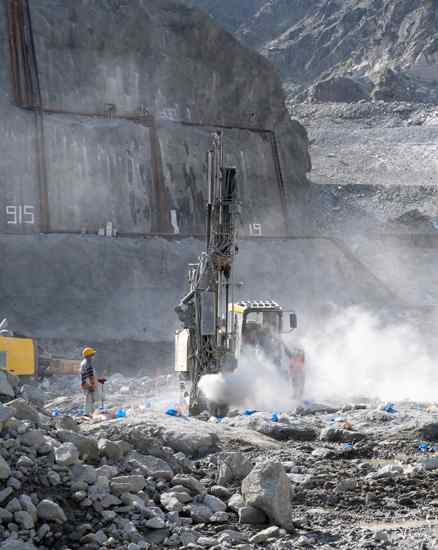

Supporting Spokane’s Construction and Industrial Economy
Spokane’s economy centers on healthcare, higher education, manufacturing, logistics, and ongoing development along corridors like Division Street/US‑2, I‑90, and the North Spokane Corridor (US‑395). Industrial activity spans areas such as the Spokane Valley industrial parks, Hillyard’s Yardley neighborhood, and sites near the Spokane River and Felts Field, generating commercial build‑outs, tenant improvements, and maintenance work.
Key hubs include the University District near the Trent Avenue corridor, the medical district on the South Hill, and distribution space around Barker Road and Sullivan in the Valley. Suppliers and trades supporting projects from Kendall Yards to Airway Heights and the West Plains—near the Amazon fulfillment centers, Fairchild AFB, and Spokane International Airport—often face slow‑pay accounts tied to warehouse upgrades, manufacturing facilities, retail fit‑outs, and public infrastructure.
CCFG serves Washington creditors through nationwide commercial collection services. Companies throughout Spokane County and nearby markets—such as the West Central and Logan neighborhoods (99201–99207), the South Hill (99203), Spokane Valley (99206, 99212, 99216), Liberty Lake (99019), and surrounding counties like Stevens, Lincoln, and Whitman—can engage us on local accounts or customers with projects elsewhere. Service coverage does not imply a physical CCFG office in every market.
Who We Help in Spokane
CCFG is a commercial collection partner dedicated to B2B receivables, with deep experience in construction credit, trade accounts, and complex lien-backed claims across Eastern Washington.
We assist businesses throughout the area, including in neighborhoods such as Kendall Yards, the University District, and along the I-90 corridor:

Suppliers of lumber, concrete, roofing, and other building materials seeking recovery on past-due deliveries and open contractor balances tied to projects near the North–South Corridor and downtown job sites.
Heavy equipment and machinery dealers working to resolve overdue commercial accounts for assets deployed on jobs from Airway Heights industrial parks to sites off US‑2 and US‑395.
Equipment rental yards needing support to qualify, document, and collect on rental receivables for fleets serving projects around Hillyard, Five Mile, and zip codes 99201–99208.
Subcontractors and specialty trades—electrical, HVAC, plumbing, paving, and more—pursuing payment for verified labor and materials furnished on regional builds near Gonzaga University, the South Hill medical district, and beyond.
Other commercial enterprises managing delinquent customer accounts, from distributors to service firms operating near the Riverfront Park area, the medical campus, and surrounding business corridors.
No two receivables look alike. A financed equipment purchase along the Trent Avenue industrial corridor, a rolling supply tab for a warehouse near the Sprague and Division interchange, and a subcontract tied to tenant improvements by the University District often demand different proof and tactics. CCFG reviews the promise to pay, the paper trail (quotes, POs, delivery tickets, change orders), and the flow of funds through the contract tiers rather than forcing every overdue invoice into a single approach.


Washington Lien Snapshot: Notices and Deadlines
Washington’s construction lien framework sets out who must send notice, where and when to record, how owners are notified, and separate timing for enforcement. A preliminary notice serves a different function than a recorded claim and they should not be conflated.
The following overview focuses on typical private projects. Public improvements, certain residential work, claimant categories, and fact-specific scenarios require individualized review.
Notice of Right to Claim a Lien
Unless a statutory exception applies, parties that provide professional services, materials, or equipment for an improvement must deliver written notice to the owner or reputed owner of their right to claim a lien.
In some cases, the prime contractor must also receive notice unless the claimant contracted directly with that prime. Confirm recipients and exceptions before relying on a general rule.
The Commercial 60-Day Lookback
For most commercial jobs, timely notice protects qualifying labor, materials, or equipment supplied during the 60 days before the notice date and continuing thereafter.
This is not a universal rule that every participant must send notice within 60 days of first furnishing. The statute includes exceptions, and newly built single-family homes typically carry a shorter 10-day lookback. Sending notice early reduces the risk that earlier contributions fall outside protection.
Claim of Lien: Record Within 90 Days
A qualifying claimant must record a Claim of Lien no later than 90 days after last furnishing qualifying labor, professional services, materials, or equipment.
Record in the county where the improvement is located. The claim must include required items such as the amount due, property description, parties involved, and first and last furnishing dates. Contract or invoice terms do not change this statutory deadline.
Send the Owner a Copy Within 14 Days
The owner or reputed owner must receive a copy of the recorded claim within 14 days by certified mail, registered mail, or personal service.
Missing this step can waive the ability to recover attorneys’ fees and costs from the owner under the specific fee-shifting provision.
Enforcement: Generally Eight Months After Recording
An action to foreclose the lien generally must be filed within eight calendar months after recording, and the owner must be served within 90 days after suit is filed. A stated credit arrangement in the lien may affect the calculation.
Review the full Washington construction lien requirements. This summary provides general information only and is not legal advice or a deadline calculation for any particular claim.
Commercial Collection Services for Spokane Businesses
Commercial and Construction Debt Collection
CCFG’s commercial debt collection services unite skilled collector outreach, financial profiling, and matter-by-matter strategy.
Our construction debt collection services account for project paperwork, tiered contracting relationships, and sources of recovery—from retainage on work near Kendall Yards to equipment accounts serving North Side jobs. Every account is unique, and results are not guaranteed.
Lien Notices and Filings
Through lien notices and filing services, CCFG supports contractors, suppliers, and design professionals with LienGuard—covering prelims, mechanics lien recording, and ongoing lien tracking, subject to eligibility and statutory timing.
Asset Research and Investigations
Asset investigations assess debtor holdings, liabilities, and potential recovery paths. Findings inform strategy, but identified assets may be encumbered or otherwise unavailable.
Credit Department Consulting
Credit department consulting helps refine credit applications, terms, documentation controls, and receivables workflows—supporting credit managers and finance leaders from the South Hill to the Valley.
Collection Software and Training
CCFG provides debt collection software to organize accounts and guide follow-up. Our seminar speaking services cover construction credit, collection techniques, and receivables best practices.
Prepare Your Past-Due Account for Review
Organized account records make it easier to confirm what was delivered, who is responsible for payment, and whether any dispute needs escalation. For construction-related receivables, it also helps to map the job participants and line up the paperwork tied to the site—whether the work occurred near Kendall Yards, along Division Street, or by the University District.
Collect and include:
- Executed credit applications, master service agreements, and purchase orders.
- Open invoices, customer statements, and aging or payment logs.
- Signed delivery tickets, equipment rental terms, timecards, and daily reports.
- Jobsite locations with ZIP codes (e.g., 99201, 99202, 99207) plus owner, GC, and subcontractor contacts.
- Preliminary notices, recorded claims or liens, bond details, and payment-related correspondence.
Note any approaching statutory dates when submitting your file. Discussion with a collector does not replace Washington notice, recording, bond, or lien enforcement obligations tied to projects in neighborhoods like Hillyard, Browne’s Addition, or along the North–South Corridor.
Spokane Commercial Collection FAQs
How long do I have to file a construction lien in Washington?
In most cases, a qualified claimant must record within 90 days after last furnishing covered labor, materials, services, or equipment to the improvement. Some roles require earlier preliminary notice. Separate timelines apply to owner notice and enforcing the recorded claim.
Do all subcontractors in the area need to serve preliminary notice?
Not always. Washington law creates exceptions, and the rules vary based on your position on the project, who hired you, and what you supplied. The requirements for a labor-only trade, a materials supplier serving projects off Sprague Avenue, and an equipment rental firm working near the Spokane River can differ.
Are equipment rental fees eligible for lien rights?
Often, yes. State statutes recognize qualifying equipment provided for the improvement of real property. Eligibility still hinges on contract structure, proper notice, and timely recording, whether the job is downtown near Riverfront Park or out by Five Mile Prairie.
Can CCFG help if my customer cites an upstream payment delay?
CCFG reviews the contract terms, proof of performance, and the payment chain to assess options. While upstream delays may explain timing, available recovery paths depend on the documents, parties involved, and compliance with Washington requirements.
Does CCFG manage accounts beyond Spokane County?
Yes. CCFG offers nationwide commercial collection services, including throughout Washington. Companies near South Hill, East Central, or Airway Heights can consult with us about receivables tied to projects in other counties or in different states.
Move Your Spokane Receivables Toward Resolution
When reminders and statements no longer change the balance, a tailored strategy can. CCFG helps B2B creditors analyze delinquent accounts, validate documentation, and pursue recovery on standard trade receivables and construction matters—whether your customers operate near Gonzaga University, along Highway 2, or by the medical district.
Start a Claim or call 800-848-4176 to discuss Spokane commercial receivables.